How to Handle Cultural Differences in Love Marriages
2026-01-31Love marriages are built on emotional connection, mutual respect, and personal choice. However, when...
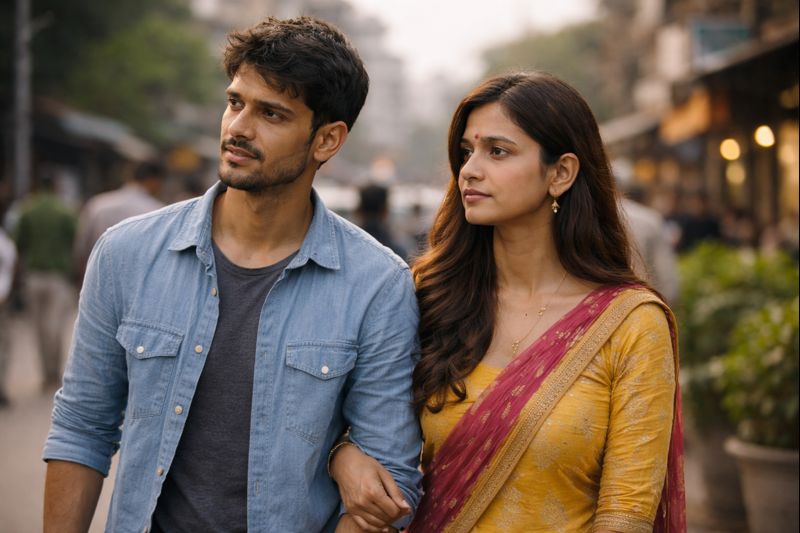
India is a country where love rarely walks alone—especially when it comes to marriage. Here, marriage is not just a personal commitment between two people; it is a social institution that binds families, communities, traditions, and generations together.
While love marriages are increasing across urban and educated sections of society, acceptance still does not come easily. Couples who choose their own partners often find themselves fighting not just emotional battles, but deeply rooted cultural beliefs. From caste and religion to family honour and societal pressure, love marriages in India continue to face resistance that goes far beyond compatibility.
This blog explores the major cultural barriers faced in love marriages across India and explains why, despite modern thinking, these challenges still exist today.
One of the biggest challenges in love marriages in India is the conflict between personal choice and family authority.
Traditionally, Indian parents play a central role in choosing a life partner for their children. When individuals make this decision independently, families often feel:
Excluded from an important life decision
Fearful of losing control or influence
Concerned about social judgement
In many households, love marriage is still viewed as disobedience rather than emotional maturity. Parents may worry that love clouds judgement, even when the couple has thought through compatibility, values, and long-term goals.
Despite legal equality, caste remains one of the strongest cultural barriers in Indian marriages.
Inter-caste love marriages often face resistance due to:
Fear of community backlash
Pressure from extended relatives
Concern about breaking ancestral traditions
Anxiety over social isolation
In rural and semi-urban areas especially, caste identity is deeply linked to family honour. In extreme cases, couples may face disownment or forced separation, showing how powerfully caste still controls marriage choices.
Interfaith love marriages face resistance not only from families but also from society at large.
Common concerns include:
Expectations of religious conversion
Differences in wedding rituals
Children’s religious upbringing
Acceptance within religious communities
For many families, marrying outside one’s religion feels like abandoning centuries-old beliefs. Even supportive parents often fear social consequences, making acceptance slow and emotionally draining for couples.
India’s cultural diversity adds another layer of complexity to love marriages.
When partners belong to different regions—North and South India, or East and West—families worry about:
Language barriers
Food habits and lifestyle differences
Festival traditions
Social adaptability
For example, a Tamil–Punjabi or Bengali–Gujarati marriage may face skepticism, even if both individuals are emotionally aligned and professionally stable.
Social approval still carries immense weight in Indian society.
Love marriages often invite:
Neighbourhood gossip
Judgment from relatives
Awkward silence at family functions
Even parents who personally accept their child’s choice may oppose love marriage due to fear of public criticism. The pressure of “log kya kahenge” continues to influence decisions more than happiness in many cases.
Gender roles strongly impact how love marriages are perceived.
Cultural biases often include:
Women choosing partners being labelled as disrespectful
Fear of losing control over daughters
Expectation that women must adjust after marriage
Men may face resistance too, but women usually carry a heavier emotional burden—especially in conservative households where independence is still questioned.
Astrology still plays a major role in Indian marriage decisions.
Love marriages are sometimes rejected due to:
Horoscope mismatches
Age differences
Belief in unfavourable planetary positions
Even emotionally strong relationships can break under pressure from astrologers and elders whose opinions hold authority in family decisions.
Economic inequality remains a silent but powerful barrier.
Families may oppose love marriages if:
One partner earns less
The family background is considered “inferior”
Social status doesn’t align
Marriage is still seen as a way to maintain or improve social standing, making financial compatibility a cultural expectation rather than a personal one.
In many parts of India, family honour is closely tied to marriage choices.
Parents fear:
Loss of respect within their community
Criticism from relatives
Breaking long-standing customs
This pressure can become overwhelming, forcing couples to delay marriage or seek legal protection just to be together.
Despite these barriers, change is happening—slowly but surely.
Urbanisation, education, financial independence, and digital matchmaking platforms are reshaping mindsets. Today, many families prefer love-cum-arranged marriages, where the individual’s choice is respected while traditions are honoured.
Compatibility, shared values, and emotional maturity are slowly gaining importance over rigid customs.
Couples facing resistance can take constructive steps such as:
Communicating openly and respectfully with families
Introducing partners gradually
Seeking support from open-minded elders
Respecting each other’s cultural backgrounds
Remaining patient and emotionally strong
Acceptance often takes time—but consistency, empathy, and understanding can bridge even deep cultural gaps.
Love marriages in India continue to face cultural challenges shaped by tradition, social expectations, and long-standing beliefs. While these barriers are real, they are not impossible to overcome.
True progress lies in balancing personal choice with cultural respect, ensuring marriages are built on love, understanding, and shared values—without completely disconnecting from tradition.
As society evolves, love marriages are no longer revolutions—they are becoming conversations. And every conversation brings us closer to acceptance.
Love marriages are built on emotional connection, mutual respect, and personal choice. However, when...
Finding a life partner as an NRI is very different from local matchmaking in India. Along with emoti...
In India, marriage is never just about two individuals—it is a union of families, expectations, resp...
In the Indian matchmaking system, a marriage biodata is much more than a formal introduction. It is...
Introduction: Marriage Is a Decision, Not a Discovery Choosing a life partner is one of the most si...
Introduction: Successful NRI Marriages Are Built on Clarity, Not Chance Non-Resident Indian (NRI) m...