NRI Matrimony - 15 Important Questions NRIs Ask Before Marriage
2026-01-30Finding a life partner as an NRI is very different from local matchmaking in India. Along with emoti...
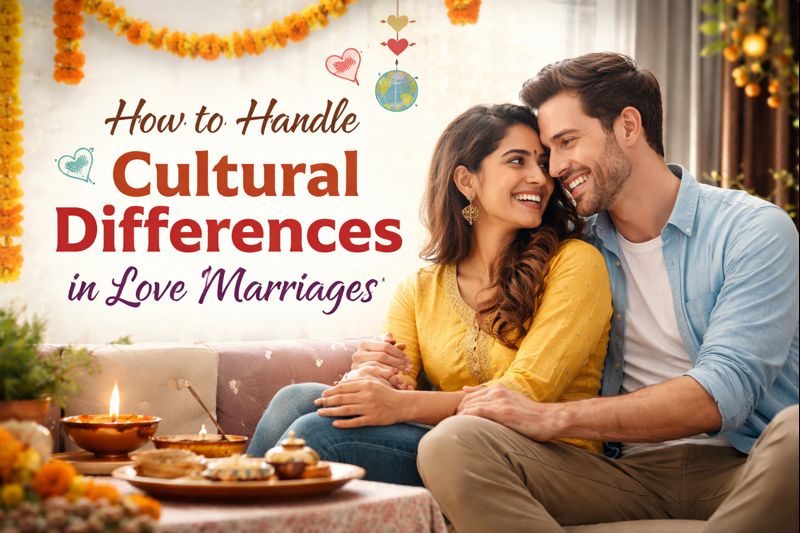
Love marriages are built on emotional connection, mutual respect, and personal choice. However, when two people from different cultural backgrounds come together, love alone may not be enough. Differences in traditions, values, language, food habits, family expectations, and social norms can create misunderstandings if not handled thoughtfully.
In a culturally diverse country like India—where every state, community, and religion has its own identity—cultural differences in love marriages are common. The good news is that with awareness, communication, and compromise, these differences can become strengths rather than obstacles.
This guide explores how couples can handle cultural differences in love marriages gracefully and build a strong, lasting relationship.
Cultural differences go beyond festivals and rituals. They influence:
Beliefs about marriage and family roles
Communication styles and emotional expression
Food preferences and daily routines
Religious practices and customs
Expectations from in-laws
Views on career, finances, and gender roles
When two individuals grow up with different cultural conditioning, clashes are natural. Problems arise not because cultures are different, but because couples assume their way is “normal” or “correct.”
The first step is recognizing that difference does not mean incompatibility.
Many love marriages face challenges not between partners, but between families and social expectations. Some common reasons include:
Resistance from parents or elders
Pressure to follow one culture over the other
Misunderstandings due to language or communication styles
Conflicting traditions around weddings, festivals, or child upbringing
Stereotypes or preconceived notions about communities
Without open discussion, these issues can slowly create emotional distance between partners.
Communication is the foundation of any successful marriage, especially one involving cultural differences.
Talk openly about:
Your upbringing and family traditions
What cultural practices matter most to you
What you are flexible about and what you are not
Your expectations from marriage and family life
Avoid assuming your partner “should know” or “will adjust.” Cultural habits are deeply ingrained and often unconscious.
Tip: Discuss sensitive topics like religion, children, festivals, food habits, and family involvement before marriage.
Respect does not mean blind acceptance—it means acknowledging the emotional importance of your partner’s culture.
Avoid mocking or dismissing traditions as outdated
Show interest in learning about rituals and customs
Participate in festivals or ceremonies when possible
Encourage your partner to stay connected to their roots
Even small gestures—like attending a family function or learning basic phrases of a language—can strengthen emotional bonds.
Many couples fall into the trap of deciding which culture to “follow.” This often leads to resentment.
Instead:
Create new traditions unique to your relationship
Celebrate festivals from both cultures
Blend rituals in weddings and family events
Decide jointly how your household will function
A marriage is not about winning cultural dominance—it’s about building a shared identity.
Family involvement is a major factor in Indian marriages. While families mean well, excessive interference can strain relationships.
As a couple:
Present a united front to both families
Respect elders but don’t allow emotional manipulation
Decide together how much influence parents will have
Address issues calmly instead of avoiding them
It’s important to remember: You are partners first, children second.
Cultural adaptation takes time. Expecting instant understanding or change can lead to frustration.
You or your partner may struggle with:
Different food habits
Language barriers
Social behavior or etiquette
Lifestyle routines
Patience, empathy, and humor go a long way. Treat misunderstandings as learning moments, not personal attacks.
Knowledge reduces fear and assumptions. Make an effort to learn about:
Religious beliefs and practices
Wedding and post-marriage customs
Gender roles in each culture
Family hierarchy and expectations
This not only prevents conflicts but also helps you explain your partner’s culture to others, especially family members.
Statements like:
“In my culture, we do it better”
“Your people are too strict”
“This makes no sense”
can be deeply hurtful.
Every culture has strengths and limitations. Comparing them competitively creates emotional distance. Instead, focus on what works best for your relationship, not what is culturally superior.
Cultural differences often resurface during major life decisions such as:
Raising children
Religious exposure for kids
Language spoken at home
Career priorities
Living with or away from parents
Discuss these topics early and revisit them as life evolves. Alignment on core values matters more than surface-level traditions.
If cultural conflicts begin affecting mental health or relationship stability, seeking help is a wise step.
Options include:
Pre-marital counseling
Couples therapy
Trusted family mediators
Community or religious counselors (if aligned with both partners)
External guidance can provide neutral perspectives and communication tools.
When handled maturely, cultural differences can enrich a marriage by:
Broadening perspectives
Encouraging flexibility and growth
Creating inclusive family environments
Teaching children tolerance and respect
Many successful intercultural love marriages thrive because partners choose understanding over ego and partnership over tradition.
Cultural differences in love marriages are not problems to be eliminated—they are realities to be managed with empathy, respect, and communication. Love may bring two people together, but mutual effort sustains the relationship.
By embracing differences, setting boundaries, and building shared values, couples can create a marriage that honors both individuality and togetherness.
In the end, the strongest marriages are not those without differences—but those where differences are handled with love.
Finding a life partner as an NRI is very different from local matchmaking in India. Along with emoti...
In India, marriage is never just about two individuals—it is a union of families, expectations, resp...
In the Indian matchmaking system, a marriage biodata is much more than a formal introduction. It is...
Introduction: Marriage Is a Decision, Not a Discovery Choosing a life partner is one of the most si...
Introduction: Successful NRI Marriages Are Built on Clarity, Not Chance Non-Resident Indian (NRI) m...

Introduction: NRI Marriage Is Not Just Long-Distance Love Finding an NRI life partner is not merely...