How to Handle Cultural Differences in Love Marriages
2026-01-31Love marriages are built on emotional connection, mutual respect, and personal choice. However, when...
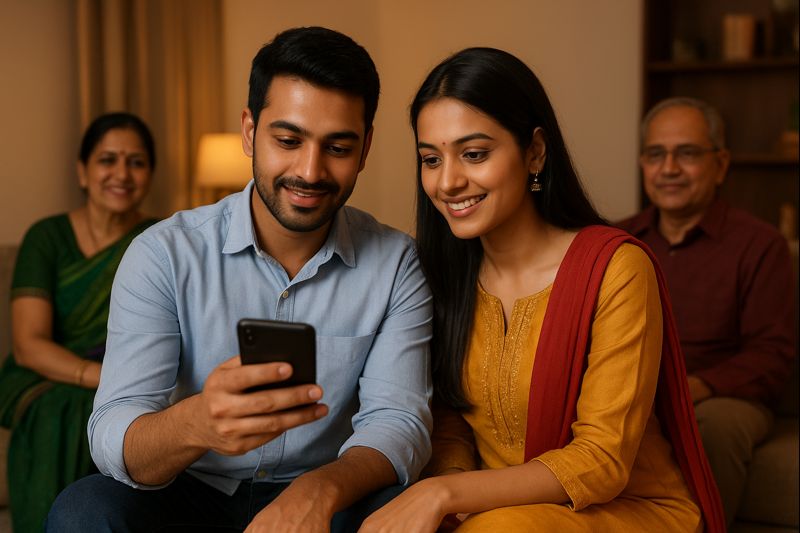
Arranged marriage has been one of the strongest pillars of Indian society for centuries. Rooted in family values, cultural compatibility, and long-term commitment, it was traditionally viewed not as an individual decision but as a collective responsibility. Parents, elders, and close relatives played a key role in finding a suitable life partner, ensuring harmony between families and alignment of social values.
However, as education levels increased, careers became more demanding, and exposure to global cultures expanded, expectations from marriage began to evolve. Today’s generation still values family approval, but emotional compatibility, shared goals, and mutual understanding have become equally important. This shift in mindset is where online matrimony has made a significant impact—redefining arranged marriage by blending tradition with technology.
In the traditional setup, arranged marriages relied heavily on personal and social networks. Matchmaking was commonly done through relatives, community elders, professional matchmakers, or newspaper matrimonial columns. Choices were usually restricted to specific castes, sub-castes, religions, or nearby regions.
Meetings between the prospective bride and groom were often brief, formal, and sometimes rushed due to social pressure. While this system successfully preserved cultural continuity and ensured strong family involvement, it offered limited space for personal choice. Compatibility was judged largely on family background rather than individual values, emotional needs, or life goals.
With the rapid growth of the internet and widespread smartphone usage, online matrimony platforms emerged as an organized solution to modern matchmaking challenges. Unlike dating apps designed for casual relationships, matrimony websites were created specifically for individuals seeking marriage.
Online matrimony retained the seriousness and purpose of arranged marriage while transforming how matches were discovered, evaluated, and communicated with. This shift marked a turning point—making arranged marriages more transparent, efficient, and inclusive.
One of the most significant ways online matrimony has redefined arranged marriage is by expanding the range of choices. Families and individuals are no longer limited to a small social circle. Instead, they can explore a vast pool of verified profiles from different cities, states, and even countries.
Despite this broader reach, traditional preferences remain intact. Filters for religion, community, language, region, and cultural practices allow families to uphold their values while searching for better-suited matches. This creates the perfect balance—more options without compromising cultural identity.
Modern arranged marriages place strong emphasis on consent and comfort. Online matrimony empowers individuals to actively participate in choosing their life partner. Brides and grooms can browse profiles, shortlist potential matches, and communicate with each other before involving their families.
This interaction helps them understand each other’s mindset, communication style, and expectations. As a result, marriages are no longer just arrangements between two families but thoughtful unions chosen by both individuals with their families’ support.
Traditional matchmaking often depended on verbal assurances and limited information. Online matrimony introduces transparency by providing detailed profiles that include education, profession, family background, lifestyle habits, religious beliefs, and future plans.
This clarity reduces misunderstandings and enables both families and individuals to make informed decisions early in the process. Transparency builds trust, which is one of the most essential foundations of a successful marriage.
Earlier, arranged marriages focused mainly on social status, income, and caste alignment. Online matrimony shifts the focus toward emotional compatibility, shared values, and lifestyle preferences. Individuals can search for partners with similar views on career goals, family roles, location preferences, and personal beliefs.
Many platforms also use intelligent matchmaking systems that recommend profiles based on deeper compatibility factors, increasing the chances of long-lasting and fulfilling marriages.
Privacy is a major concern, especially for women and working professionals. Online matrimony platforms allow users to control who can view their profiles, initiate contact, or access personal details. Unwanted interactions can be blocked or reported easily.
This secure and respectful environment minimizes social pressure, gossip, and interference, making the arranged marriage process more dignified and less stressful.
Contrary to the belief that online matrimony sidelines parents, it actually creates a more balanced approach. Individuals take the initiative in exploring compatibility, while families get involved at the right stage to discuss values, traditions, and long-term responsibilities.
This collaborative process reduces generational conflicts and ensures that both emotional compatibility and family harmony are equally prioritized.
Online matrimony has been a major advantage for Indians living abroad. It helps NRIs find culturally compatible partners while facilitating long-distance communication and discussions around relocation. Parents in India can also stay involved digitally, bridging geographical gaps.
As a result, NRI arranged marriages have become more organized, transparent, and successful than ever before.
Traditional arranged marriages often came with rigid timelines influenced by age, relatives, and societal expectations. Online matrimony offers flexibility. Searches can proceed at one’s own pace, profiles can be updated, and decisions can be made without public scrutiny.
This freedom allows couples to be emotionally prepared and lays a stronger foundation for marriage.
Online matrimony has not replaced arranged marriage; it has refined it. The core values—family involvement, cultural compatibility, and lifelong commitment—remain unchanged. What has evolved is the process, which is now more transparent, choice-driven, and respectful of individual preferences.
Today, arranged marriage is not about compromise but about compatibility, consent, and confidence.
As technology continues to evolve, online matrimony will become even more personalized. Features such as video introductions, AI-based compatibility insights, stronger verification systems, and personalized matchmaking support will further enhance the experience.
Yet, the essence of arranged marriage—trust, family bonding, and commitment—will always remain the same.
Online matrimony has redefined arranged marriage by bringing clarity, choice, and confidence into a traditionally family-driven system. It bridges gaps between generations, cultures, and expectations, creating marriages that are both meaningful and modern.
In today’s world, arranged marriages are no longer about simply being matched—they are about being understood. And online matrimony has emerged as the ideal platform to make that possible.
Love marriages are built on emotional connection, mutual respect, and personal choice. However, when...
Finding a life partner as an NRI is very different from local matchmaking in India. Along with emoti...
In India, marriage is never just about two individuals—it is a union of families, expectations, resp...
In the Indian matchmaking system, a marriage biodata is much more than a formal introduction. It is...

Introduction: Marriage Is a Decision, Not a Discovery Choosing a life partner is one of the most si...
Introduction: Successful NRI Marriages Are Built on Clarity, Not Chance Non-Resident Indian (NRI) m...