How to Handle Cultural Differences in Love Marriages
2026-01-31Love marriages are built on emotional connection, mutual respect, and personal choice. However, when...
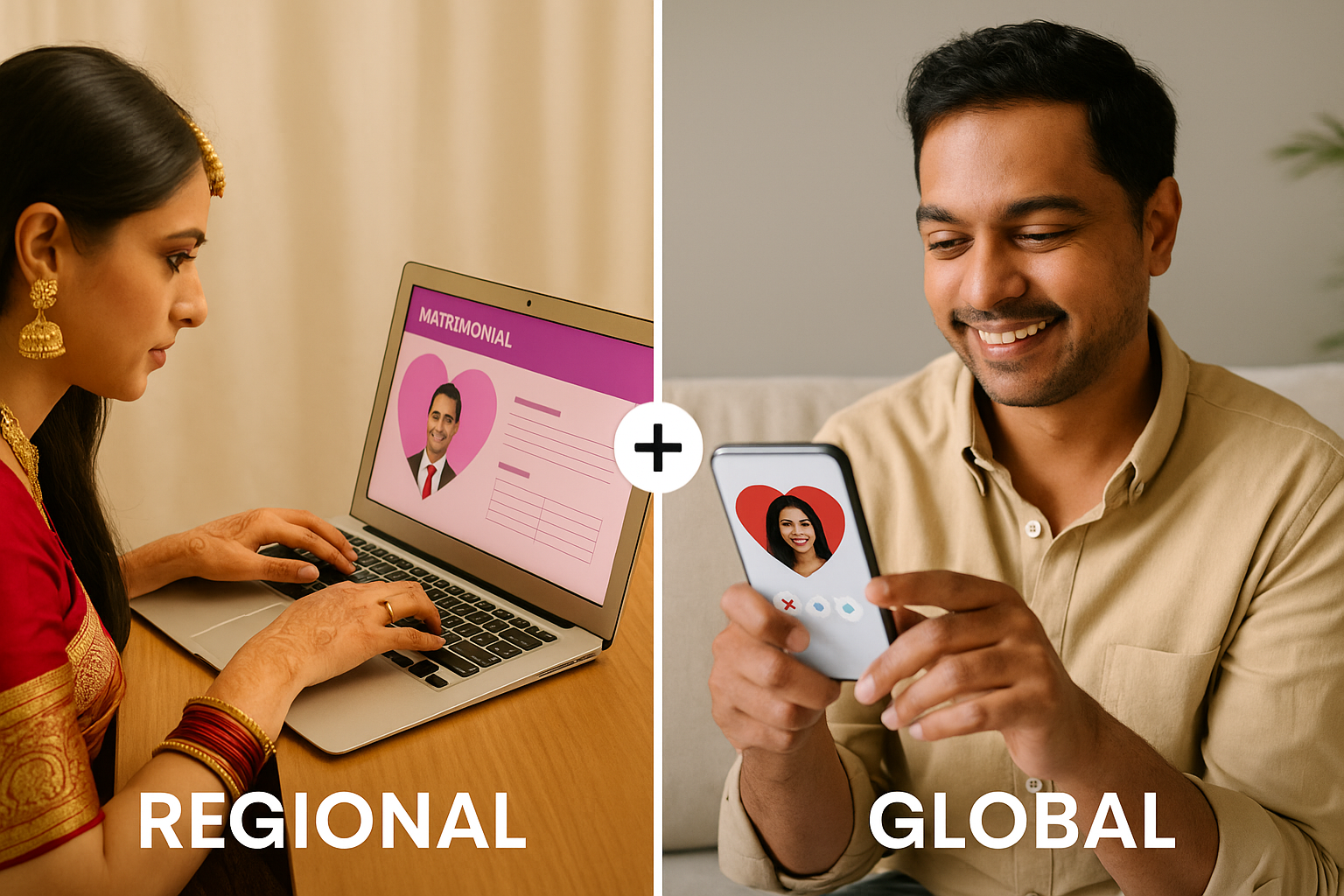
In today’s rapidly evolving digital landscape, marriage is no longer confined to family introductions, neighbourhood recommendations, or Sunday classifieds. Especially for Indians—both within the country and abroad—the search for a life partner has increasingly moved online. But a new choice emerges: should you use a regional Indian matrimony site tailored to your language, caste, or religion—or a global matchmaking platform that prioritises compatibility and diversity?
For NRIs, Millennials, Gen Z, and even culturally rooted families, this decision is more than just technical—it’s deeply personal.
This blog breaks down the pros and cons of both regional and global matrimony platforms to help you make the most informed and culturally aligned choice.
Regional marriage platforms are designed for users who wish to find a partner from a specific community, culture, or geographical background. These include platforms like DigiShaadi, Tamil Matrimony, Kerala Christian Matrimony, or Agarwal Matrimony. Such portals often use caste, language, religion, or region as the core framework for match filtering.
They cater to the strong cultural values that many Indian families still hold, especially when it comes to arranged or semi-arranged marriages.
Couples matched on regional platforms often share the same festivals, cuisine, dress customs, and even religious practices—reducing post-marriage adjustment.
Regional matrimony portals offer robust filters for:
Caste and subcaste
Mother tongue and regional dialects
Zodiac sign and horoscope
Religious denomination (e.g., Sunni, Shia, Orthodox, Roman Catholic)
Parents can manage or oversee profiles, which helps maintain family values and respect intergenerational expectations.
From horoscope matching to matching gotra or family lineage, regional sites often offer built-in features that align with traditional Indian matchmaking norms.
Limiting searches to one caste, language, or sub-community can dramatically reduce your options—especially for NRIs or urban Indians.
Some younger users find the experience outdated, overly focused on caste or religion, and lacking in flexibility or personality-driven filtering.
Younger users may feel restricted if profiles are primarily handled by parents or relatives, which is common in many regional setups.
Compared to global apps, many regional platforms have slower innovation cycles and fewer tech-first features like AI-based compatibility or video introductions.
Global matchmaking platforms include not only NRI-focused matrimony portals like Shaadi.com Global, Jeevansathi NRI, and EliteMatrimony, but also modern dating-meets-marriage platforms like Hinge, Bumble, and Muslima.
These platforms usually emphasise individual personality traits, goals, and values, rather than community filters.
Users get exposure to candidates from different countries, professions, ethnicities, and even faiths. This is especially beneficial for Indians abroad who want a global-minded partner.
Modern filters based on education, life goals, communication style, hobbies, and lifestyle preferences take precedence over caste or horoscope.
Most platforms allow the primary user to control communication, visibility, and interest levels—making it comfortable for independent-minded users.
These platforms invest heavily in sleek interfaces, AI-driven matchmaking, video calling, and secure chat tools—features younger Indians prefer.
For those seeking a partner who shares deep cultural roots, traditions, and rituals, global apps may fall short.
Family members usually aren’t involved or visible on global platforms—this can cause conflict for users whose parents want to be part of the process.
Not all global platforms are designed for marriage. Many prioritise dating or casual interaction, which can lead to misaligned intentions.
Without robust ID verification or cultural moderation, users may face safety risks or misrepresentations.
NRIs often feel torn between two worlds: traditional Indian family values and the global realities of life abroad. The decision between regional and global platforms is especially complex for them.
“I want someone who respects Indian culture, but I’m okay with someone from another language or region.”
“My parents prefer a community match, but I care more about emotional compatibility.”
“I live in the US, but I want to marry someone willing to move here.”
For such users, hybrid Indian platforms like Digi Shaadi are emerging as a powerful bridge. They combine:
Verified cultural filters
Global reach for NRIs
Family-friendly features
Tech-enabled matchmaking tools
As covered in our blog Why More Millennials and Gen Z Are Choosing Marriage Matrimony Sites, today’s youth are clear about a few things:
They value autonomy in choosing a partner.
They want transparency, safety, and control over communication.
They prefer career and value alignment over caste or horoscope.
They appreciate family involvement—but on their terms.
Modern Indian matrimony platforms that adapt to these expectations will continue to gain trust among this group.
DigiShaadi offers a unique hybrid approach, ideal for NRIs and young Indians who want to blend tradition with technology.
Community and language filters without being rigid
Mobile app with modern user interface
Parental logins that allow joint decisions
NRI search tools for cross-border matching
Verified profiles with ID and photo checks
Success stories that build trust and relatability
It appeals to both the individual user and the family, making it one of the most balanced options for Indian matchmaking.
Learn more:
Marriage Matrimony Sites: Why They Work in Today’s India
Choosing between regional and global marriage platforms comes down to a few core questions:
If vital: regional platform
If flexible: global platform
Yes: regional sites like DigiShaadi
No, or maybe later: global/dating app
Serious marriage: regional or dedicated NRI sites
Exploration or compatibility first: global platforms
NRIs often benefit from hybrid sites with cross-border matching
In today’s India, love, marriage, and tradition are no longer one-size-fits-all. Whether you choose a regional platform grounded in your heritage or a global site offering flexibility and range, what matters most is intent, clarity, and cultural alignment.
Choose the method that works best for you—your beliefs, your future plans, and your family dynamics.
For many, the ideal experience may lie in using both: starting with a broad search and then narrowing down with the help of trusted, culturally aware matrimony portals like DigiShaadi.

Love marriages are built on emotional connection, mutual respect, and personal choice. However, when...

Finding a life partner as an NRI is very different from local matchmaking in India. Along with emoti...
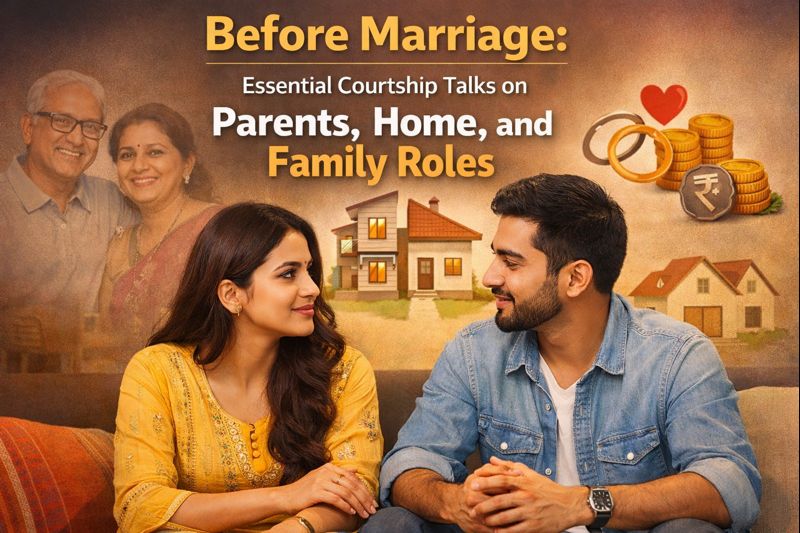
In India, marriage is never just about two individuals—it is a union of families, expectations, resp...
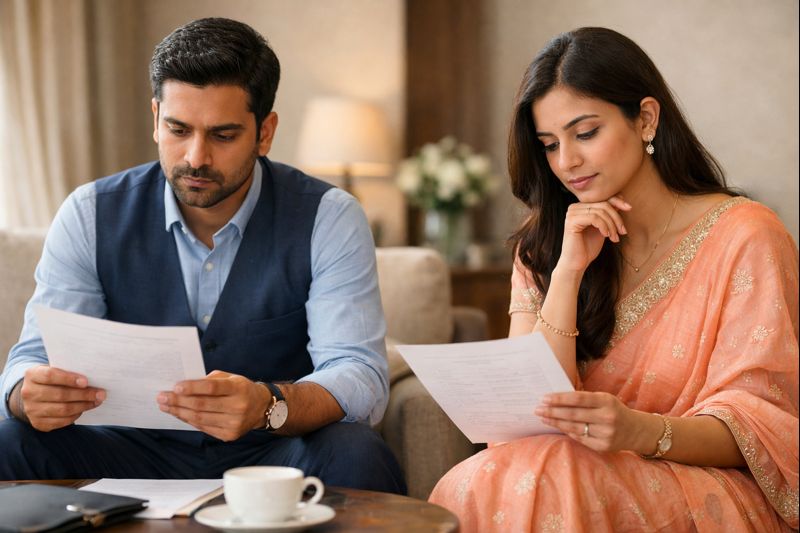
In the Indian matchmaking system, a marriage biodata is much more than a formal introduction. It is...

Introduction: Marriage Is a Decision, Not a Discovery Choosing a life partner is one of the most si...
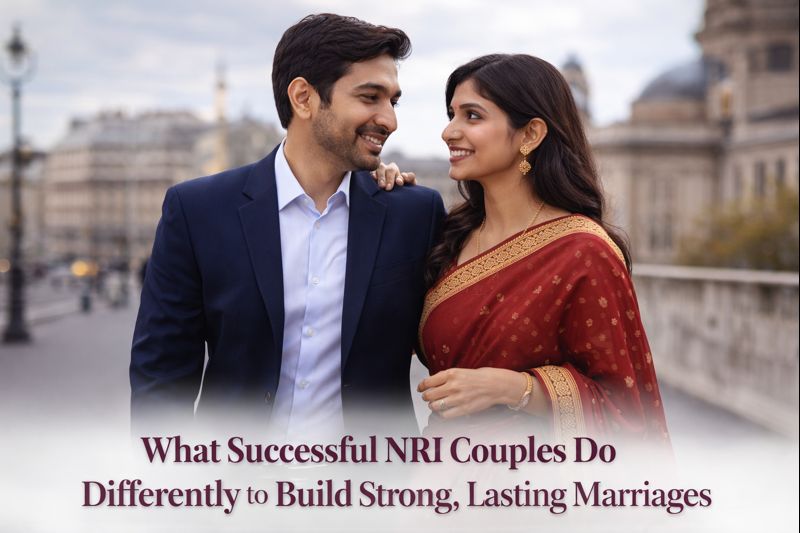
Introduction: Successful NRI Marriages Are Built on Clarity, Not Chance Non-Resident Indian (NRI) m...