How to Handle Cultural Differences in Love Marriages
2026-01-31Love marriages are built on emotional connection, mutual respect, and personal choice. However, when...
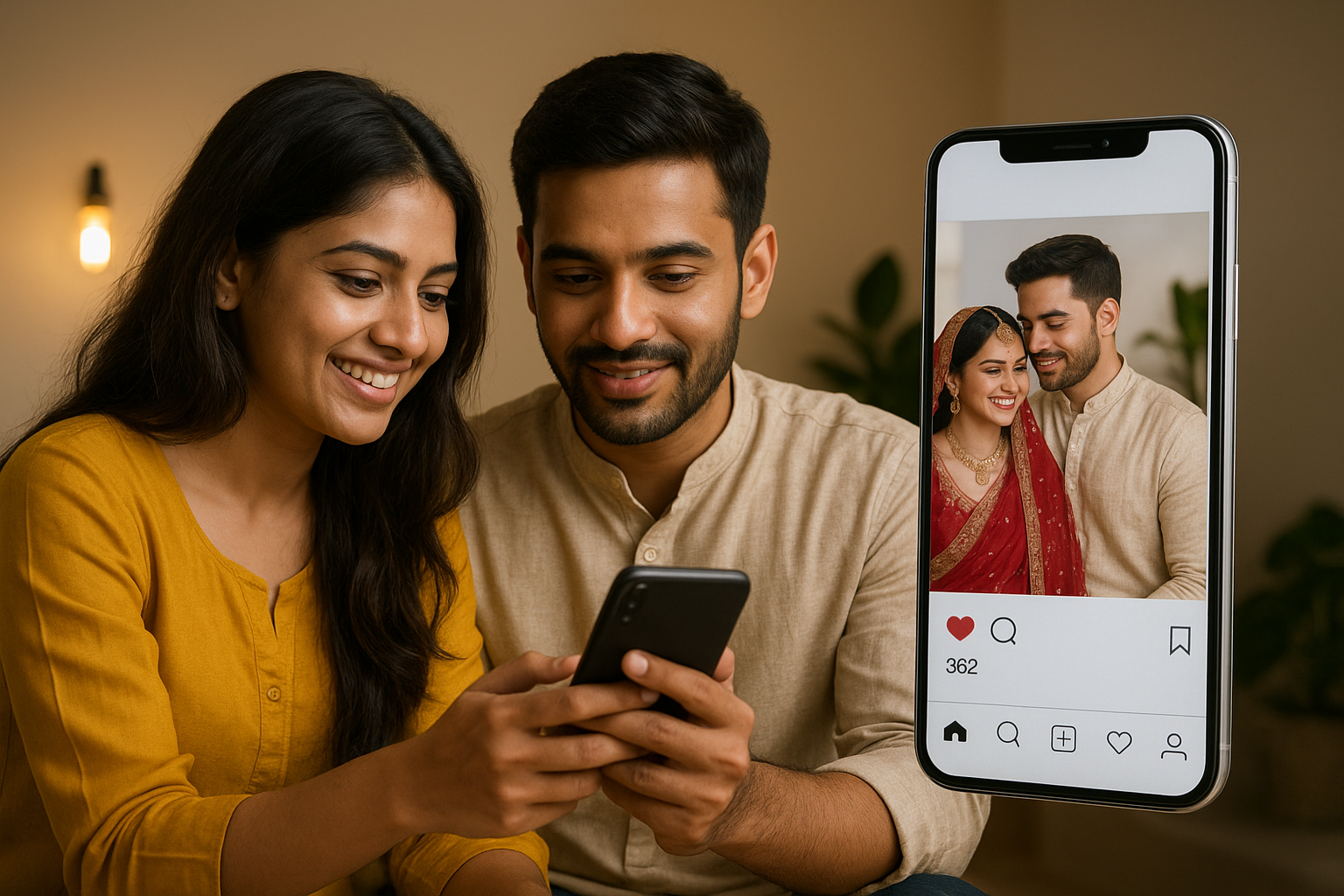
Love in the 21st century doesn’t begin with a glance across a crowded room—it often begins with a like, follow, or DM on Instagram. The social media influence on relationships is reshaping the way couples connect, communicate, and even make marriage decisions. For Gen Z and millennials, digital platforms like WhatsApp, Instagram, and Facebook are not just communication tools—they are relationship lifelines.
While social media strengthens bonds for many, it also brings challenges like trust issues, jealousy, and communication barriers. Let’s explore how social media affects love, intimacy, and even marriage decisions in India and around the world.
The impact of social media on modern relationships cannot be ignored. Platforms once meant for connecting friends have now become key stages for romance and marriage.
First impressions online—Many couples meet via DMs, online communities, or even mutual Instagram followers.
Digital courtship—likes, comments, and story replies have become the new flirting.
Relationship status validation—Couples often feel their relationship is “official” only after it’s visible online.
This shift shows how digital age relationships are deeply tied to technology and intimacy.
Not everything about social media is negative. In fact, many couples credit apps for keeping them closer.
For couples in different cities or countries, social media and long-distance relationships work as emotional lifelines. Video calls, voice notes, and Instagram updates help partners stay connected and share their daily lives.
Social media makes it easy to celebrate anniversaries, engagements, or weddings. These posts not only spread joy but also offer social validation, which can strengthen a couple’s bond.
When couples share content, like traveling together or supporting each other’s achievements, it increases their sense of emotional connection and companionship.
But the story isn’t always rosy. The negative effects of social media on relationships are equally powerful.
Constant exposure to likes, follows, and interactions with others often leads to social media jealousy and insecurity. A harmless comment can sometimes spiral into suspicion.
Many couples report social media and trust issues as a leading cause of conflict. Excessive monitoring, checking “last seen” on WhatsApp, or questioning online activity creates emotional distance.
Ironically, while apps improve connectivity, they also cause communication barriers. Couples may text all day but struggle to have deep, meaningful conversations in real life.
Conflicts that once stayed private often become public online. Unfollowing, blocking, or deleting couple photos has become a visible signal of breakup culture in the digital era.
In India, the influence goes beyond dating—it reaches into marriage decisions.
Digital reputation check—Before agreeing to a proposal, families often scan a person’s Facebook, Instagram, and LinkedIn profiles.
Compatibility through content—Millennials and Gen Z couples judge compatibility through shared interests on Instagram Reels, music playlists, or travel posts.
Influence of community—Family members and friends also form opinions based on what they see online, impacting marriage decisions.
Here, social media matchmaking in India overlaps with traditional shaadi culture.
Maintaining intimacy is one of the biggest challenges in long-distance relationships. Social media helps, but it also complicates things.
Positives—Daily chats, video calls, and story updates keep couples emotionally close.
Negatives—Time-zone differences, missed calls, or delayed replies often create unnecessary doubts.
Trust factor—Excessive checking of a partner’s online activity sometimes fuels insecurity.
This is why social media and long-distance relationships require trust, patience, and balance.
The difference between online dating and real-life relationships has become more evident.
Online validation pressure – Many couples post frequently for likes but fail to nurture real-world intimacy.
Comparisons with others—Constantly seeing “perfect couples” online can cause dissatisfaction in real relationships.
Balance is key—psychologists advise couples to prioritize real-life communication while using social media only as a support tool.
Technology has redefined what intimacy means:
Emojis, GIFs, and late-night calls have become the new love language.
Couples often prefer to express feelings online instead of face-to-face.
However, true intimacy requires presence, touch, and real conversations—something no app can replace.
Thus, technology and intimacy in relationships must be carefully balanced.
If left unchecked, social media can become toxic. Warning signs include:
Obsessive monitoring of partner’s activity (social media stalking)
Lack of privacy in the relationship
Comparing your relationship with others online
Spending more time on screens than with your partner
These red flags highlight the relationship challenges in the digital era.
Despite the risks, couples can use social media positively if they set boundaries:
Limit screen time—avoid scrolling endlessly when spending time together.
Set privacy rules—decide how much of your relationship you want online.
Avoid comparisons—every relationship is unique; don’t measure it against “Instagram couples.”
Prioritize offline intimacy—Dinner dates, conversations, and real-life gestures should outweigh virtual ones.
Communicate openly—instead of assuming, talk about insecurities or misunderstandings caused by online behavior.
As technology evolves, so will relationships. With AI, dating apps, and digital communities, the future of relationships may look even more online-driven. But no matter how advanced social media becomes, the core of love remains emotional trust, respect, and real-world connection.
The social media influence on relationships is a double-edged sword. It connects couples, strengthens long-distance love, and even helps in marriage decisions in India, but it also creates jealousy, insecurity, and trust issues.
For Gen Z and millennials, the key is balance: enjoy the convenience of digital connections while never forgetting the importance of real-life intimacy and communication. A healthy relationship in the digital era is one where technology supports love, not replaces it.

Love marriages are built on emotional connection, mutual respect, and personal choice. However, when...
Finding a life partner as an NRI is very different from local matchmaking in India. Along with emoti...
In India, marriage is never just about two individuals—it is a union of families, expectations, resp...
In the Indian matchmaking system, a marriage biodata is much more than a formal introduction. It is...

Introduction: Marriage Is a Decision, Not a Discovery Choosing a life partner is one of the most si...

Introduction: Successful NRI Marriages Are Built on Clarity, Not Chance Non-Resident Indian (NRI) m...