How to Handle Cultural Differences in Love Marriages
2026-01-31Love marriages are built on emotional connection, mutual respect, and personal choice. However, when...
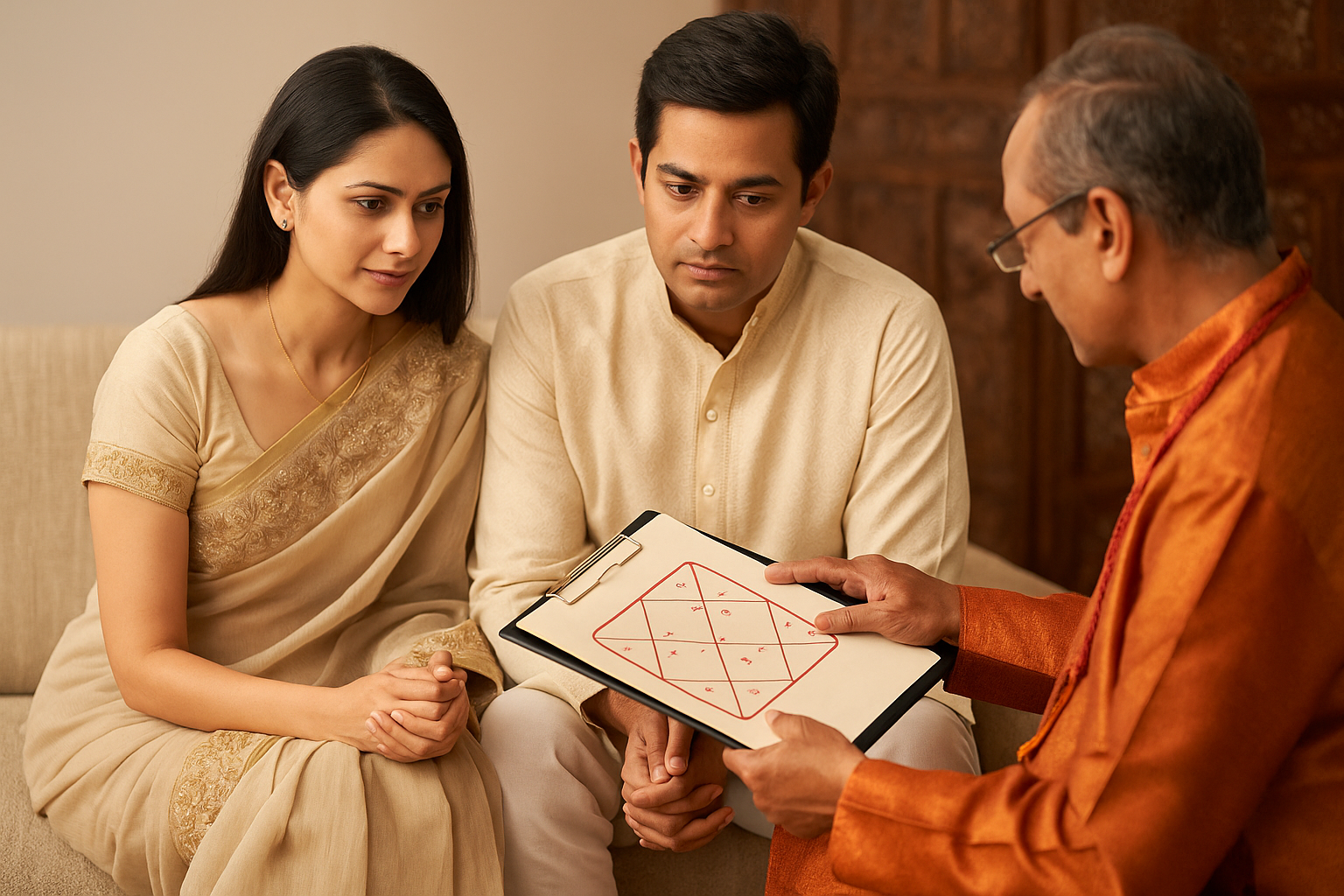
In India, marriage is not merely a union of two individuals — it’s a bond between families, values, traditions, and even stars. While many elements of matchmaking have gone digital, one ancient practice has continued to hold its ground: horoscope matching, or Kundli Milan. Whether you believe it's scientific, cultural, or just tradition, this step remains a key part of Hindu matrimony, even in the age of online platforms like DigiShaadi.
But why? What makes horoscope matching still so significant — especially when data algorithms, AI, and compatibility filters already promise accuracy?
Let’s explore the layered world of astrology in matchmaking and how it intersects with belief, behaviour, and digital innovation.
Horoscope matching has deep Vedic roots. In Hindu tradition, a person’s birth chart (Janam Kundli) is believed to hold cosmic insights about their nature, future, and compatibility with others. These charts are analysed using Guna Milan, which compares 36 key attributes between two charts to predict marital success.
A score above 18 out of 36 is generally considered acceptable for marriage.
But this isn’t just superstition. These gunas consider temperament, health, family happiness, sexual compatibility, and even longevity of the couple — factors that genuinely matter in marriage.
So even today, families — especially in urban-rural India — continue to trust horoscope matching, sometimes even over emotional or romantic compatibility.
(Explore this more in our detailed guide on Urban vs. Rural Usage of matrimony portals.)
Astrologers claim that planetary positions at the time of birth influence a person’s character and life path. However, the scientific community remains sceptical. Modern science hasn’t validated astrology as a hard science. There's no empirical evidence proving planets can affect personality or destiny.
Still, there’s a psychological dimension. People who follow astrology often feel more in control or confident in their decisions. This perceived emotional security is powerful.
So is horoscope matching really scientific?
Maybe not in the traditional sense. But its psychological, cultural, and emotional relevance is hard to deny — especially in a society where belief systems are deeply intertwined with family decisions.
Absolutely.
Modern platforms like DigiShaadi have integrated traditional practices like Kundli Milan with advanced digital matchmaking. Today, users can upload their birth details, and the system automatically matches Gunas with potential profiles.
And that’s not all.
Many platforms are blending astrology with AI-based compatibility tools, allowing users to compare:
Guna scores (traditional)
Emotional compatibility (AI behavior mapping)
Lifestyle preferences
Career and location filters
Faith alignment
(Learn more in our blog: How Matrimony Sites Match You – Algorithms, Filters & Human Touch.)
This hybrid model appeals to both generations: the parents who want a Kundli and the younger generation who want personal compatibility.
You might think young Indians would reject this tradition — but the truth is more nuanced.
According to recent DigiShaadi insights, nearly 65% of Millennials and Gen Z still consider horoscope matching at some stage in their decision-making process. Many don’t start with it, but once compatibility and values align, they often go back to check the Kundli, especially to reassure families.
In fact, our deep-dive blog Why More Millennials and Gen Z Are Choosing Marriage Matrimony Sites reveals that younger Indians are blending tradition with tech like never before.
Here’s the big question: are people checking horoscopes because they believe, or because their families insist?
In most cases, it’s both. While urban professionals may not believe in astrological doshas or Mangal Dosh, they still comply because it keeps everyone happy — especially when emotional compatibility is already in place.
This balancing act is especially visible among working professionals, who value both personal independence and family harmony. Read more on How Working Professionals in India Use Matrimony Portals.
Earlier, families visited astrologers, shared Kundlis by hand, and waited for interpretations. Now, all this happens instantly online.
Top matrimony platforms offer:
Kundli match calculators
Dosha analysis
Guna score breakdown
Suggestions for remedies (like Pooja or gemstones)
Some even highlight unspoken dealbreakers like Nadi Dosha, which, according to belief, may affect the couple’s childbearing potential.
(Want to know what else could silently break a match? Read our blog on Unspoken Dealbreakers in Matrimony Matches.)
This is where things get tricky. Even if two people feel deeply compatible, mismatched Kundlis can stall or end the process.
But families now show more flexibility — especially when emotional, spiritual, and lifestyle values align. Horoscope mismatch is no longer an automatic rejection for many.
Interestingly, faith and religion also influence this process. Christian, Sikh, and Muslim families may prioritise other factors — faith, prayer life, or family background — over astrological match.
(Explore this more in Faith-Based Matching: How Religion Shapes Matrimony Matches.)
Among NRIs or interfaith couples, horoscope matching plays a minimal or symbolic role. These matches often focus more on:
Communication
Values
Cultural compatibility
Future goals
In such cases, astrology may be skipped or performed as a formality to respect parents’ sentiments.
Still, many NRIs access regional or global matrimony portals that offer optional Kundli features. Curious? Check out regional vs global marriage matrimony sites.
Not at all.
Horoscope matching should be seen as one layer of decision-making, not the entire process. Over-reliance on astrology can lead to missed opportunities or discrimination, especially against people with certain doshas.
Instead, the most successful couples are those who balance:
Personal compatibility
Emotional maturity
Family expectations
Practical concerns
AND spiritual beliefs (including astrology)
(Read more about this balance in Compatibility vs Convenience: What Makes a Match Truly Work.)
Let’s not forget: fake astrologers and fraud Kundli readers have misled families, especially online. Always verify sources.
Top platforms like DigiShaadi now ensure:
Verified astrologers
Transparent software-generated Kundlis
Guidance from authentic spiritual advisors
Safety features to avoid scams
(Stay informed with our guide on How to Avoid Scams on Indian Matrimony Portals.)
Horoscope matching is neither fully scientific nor purely irrational. It’s a cultural filter — shaped by history, belief, emotion, and social structure.
As India’s digital matchmaking landscape evolves, astrology is being reimagined. It’s no longer the only criteria, but it still provides reassurance to many. Used wisely, it can be a bridge between generations — not a wall between hearts.
So, the next time someone asks, “Do your stars match?” — Just smile and say, “Yes, but we also match in values, goals, and laughter.”

Love marriages are built on emotional connection, mutual respect, and personal choice. However, when...
Finding a life partner as an NRI is very different from local matchmaking in India. Along with emoti...
In India, marriage is never just about two individuals—it is a union of families, expectations, resp...
In the Indian matchmaking system, a marriage biodata is much more than a formal introduction. It is...

Introduction: Marriage Is a Decision, Not a Discovery Choosing a life partner is one of the most si...
Introduction: Successful NRI Marriages Are Built on Clarity, Not Chance Non-Resident Indian (NRI) m...