How to Handle Cultural Differences in Love Marriages
2026-01-31Love marriages are built on emotional connection, mutual respect, and personal choice. However, when...
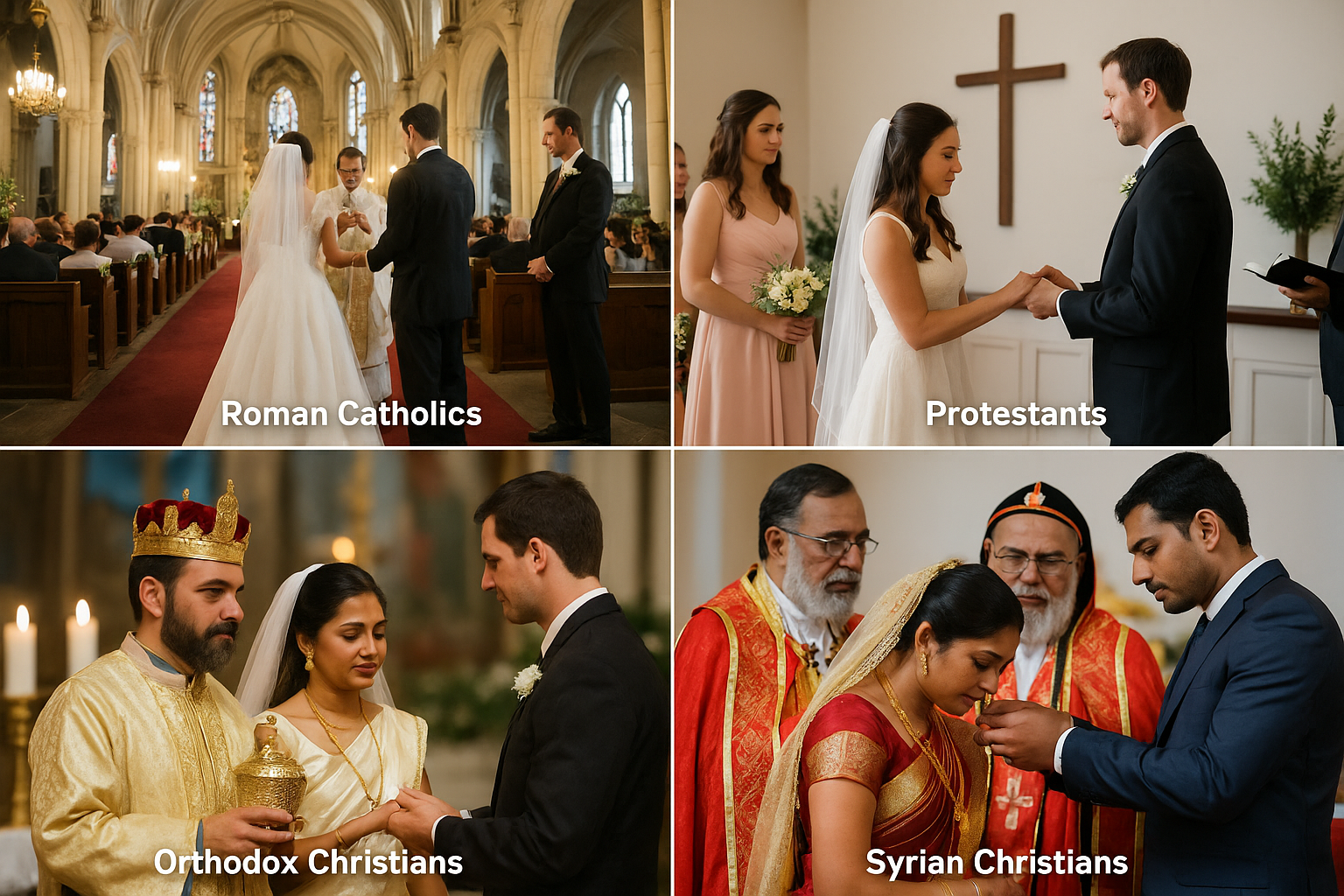
Christianity in India is a vibrant mosaic of communities, each with distinct matrimonial customs and deeply rooted traditions. From the sacred coastal churches of Kerala to the hilltop chapels in Nagaland, Indian Christians reflect a beautiful blend of faith, culture, and regional heritage. This blog explores how different Christian communities in India—Roman Catholics, Protestants, Orthodox, and Syrian Christians—celebrate matrimony and approach matchmaking in today’s evolving digital landscape.
India is home to over 28 million Christians (Census 2011), representing nearly 2.3% of the population. Concentrated in states like Kerala, Goa, Tamil Nadu, Karnataka, Nagaland, and Meghalaya, Christian communities uphold unique matrimonial rituals. While united by faith in Christ, their wedding ceremonies and matchmaking norms vary significantly based on denomination, geography, and ancestral customs.
“Our wedding in Kottayam wasn’t just a ritual—it was a spiritual experience, with centuries-old prayers and symbols that tied us not just to each other, but to generations of faith,” says Maria Varghese, a Syrian Christian bride from Kerala.
Understanding these differences is crucial—not only for Indian Christians seeking a life partner but also for interfaith couples navigating Indian Christian traditions. Let’s explore the major communities and their unique approach to matrimony.
Kerala, Goa, Tamil Nadu, Maharashtra, and Northeast India
Traditionally arranged by parents through parish networks
Growing use of Christian matrimony platforms like DigiShaadi
Emphasis on caste (especially in Tamil Nadu and Goa) and family background
Solemnized in a church with a full Catholic Mass
Exchange of vows and rings before a priest
Brides wear white gowns, grooms in suits or tuxedos
The Nuptial Blessing is the central spiritual moment
Post-wedding celebrations include music, dance, and formal receptions
Urban Catholic families now accept love-cum-arranged marriages
Inter-caste and inter-denominational unions are on the rise
Baptist, Methodist, Anglican, Lutheran, Presbyterian, Pentecostal
Tamil Nadu, Andhra Pradesh, Karnataka, Northeast India
Matches proposed via church networks and family referrals
Emphasis on shared values, spiritual maturity, and personal compatibility
Increasing reliance on faith-aligned matrimonial platforms
Simpler ceremonies centered around Bible readings, vows, hymns, and sermons
Brides wear white dresses; grooms wear formal suits
No sacraments, but rich in scripture and spiritual preparation
Pre-marital counseling is often a must
Less focus on pomp, more on scripture
Community prayer and family bonding are central
Descendants of Apostle Thomas’ mission in India (52 AD)
Syro-Malabar Catholic, Syro-Malankara Catholic, Mar Thoma, Jacobite, Orthodox Syrian
Predominantly Kerala
Family and church-driven matchmaking
Sometimes involves horoscope matching alongside prayer
Sub-groups like Knanaya Christians often marry within their community
Ceremonies in Malayalam, often in ancestral churches
Minnu (cross on thread) tied by groom replaces the mangalsutra.
Manthrakodi (wedding sari) is gifted by the groom
Blend of Christian and pre-Christian symbolism
The timing of wedding may follow Hindu astrological customs
Strong community involvement and acceptance is vital
Indian Orthodox (Malankara Orthodox Syrian Church), Jacobite Syrian Church
Kerala, with strong diaspora in Gulf countries, USA, and Australia
Arranged through family and community channels
Orthodox Christians prefer matches within their own denomination
Online platforms like DigiShaadi are now gaining trust among NRIs
Highly symbolic and liturgical, with incense, holy oil, crowns, and candles
Conducted by bishops or senior priests
Includes blessing, crowning, and spiritual anointing
Lasts longer than Catholic or Protestant weddings
Deep focus on post-marriage family integration
Emphasis on spiritual responsibility within the marriage
Predominantly Baptist, Presbyterian, and Catholic
Nagas, Mizos, Khasis, Garos
Nagaland, Mizoram, Meghalaya, Manipur
Mostly love marriages within the tribe or church community
Approval of tribal elders and family blessings are key
Increasing adoption of faith-based matrimony apps
Held in churches, followed by village-wide celebrations
Attire may be tribal, Western, or a blend
Music, traditional dances, and feasting are central
Festivities may continue for days
Strong connection to tribal heritage and Christian faith
While diverse, most Indian Christian weddings share core values:
Church-Centric Ceremonies: Marriage is treated as a sacrament
Parental Involvement: Consent of both families is deeply valued
Faith-Based Counseling: Many churches mandate pre-marriage guidance
Biblical Foundations: Emphasis on love, fidelity, and mutual respect
With families going digital, platforms like DigiShaadi.com are revolutionising how Indian Christians find life partners.
Choose denomination, language, profession, education, prayer style
Narrow down by region or community (e.g., Knanaya, Mizo, Anglo-Indian)
Highlight church involvement, beliefs, and family values
Include preferences like “prayer-led courtship” or “Sunday school teacher”
DigiShaadi uses ID verification, phone/email checks, and family involvement options
Allows users to opt for clergy or parent moderation
Perfect for Indian Christians in the U.S., Gulf, Canada, or Australia looking to marry within faith and values
Indian Christian matrimony is a testament to faith expressed through cultural beauty and family devotion. Whether it’s the solemn elegance of a Goan Catholic Mass, the rich symbolism of a Syrian Christian ceremony, or the jubilant community feasts of a Naga wedding, each tradition reveals the deep-rooted spirituality of Christian love.
In today’s digital age, platforms like DigiShaadi help you honour these traditions while embracing modern tools to find a meaningful, faith-aligned life partner. Unity in Christ, diversity in culture—this is the soul of Indian Christian matrimony.
Love marriages are built on emotional connection, mutual respect, and personal choice. However, when...
Finding a life partner as an NRI is very different from local matchmaking in India. Along with emoti...
In India, marriage is never just about two individuals—it is a union of families, expectations, resp...
In the Indian matchmaking system, a marriage biodata is much more than a formal introduction. It is...
Introduction: Marriage Is a Decision, Not a Discovery Choosing a life partner is one of the most si...
Introduction: Successful NRI Marriages Are Built on Clarity, Not Chance Non-Resident Indian (NRI) m...