How to Handle Cultural Differences in Love Marriages
2026-01-31Love marriages are built on emotional connection, mutual respect, and personal choice. However, when...
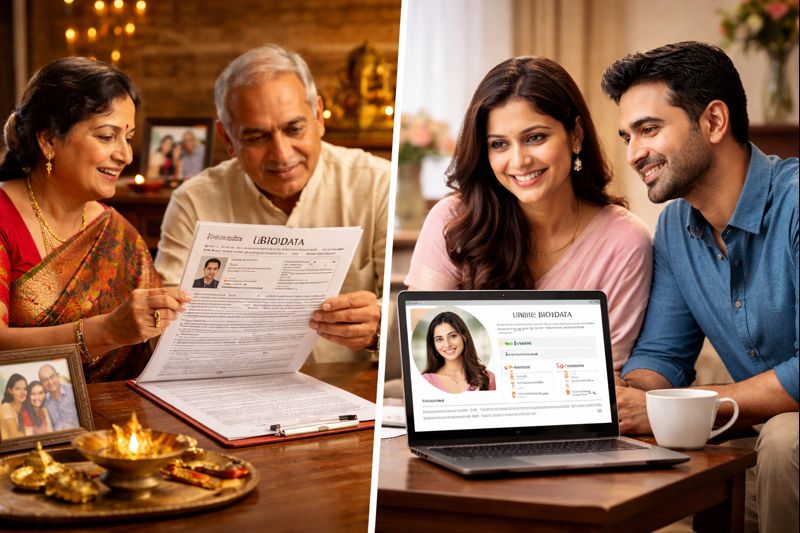
Are traditional marriage biodatas still relevant, or has everything changed in today’s modern Indian matrimony?
The answer is simple—marriage biodatas have evolved, not disappeared. While the format and focus have changed, the core purpose remains the same: helping families and individuals find the right life partner with clarity and trust.
This guide is especially useful for:
Individuals creating or updating a marriage biodata
Parents reviewing biodatas for their son or daughter
Families comparing traditional and modern matrimony approaches
Unlike casual dating profiles, a marriage biodata in India represents:
Serious intent for marriage
Family background and values
Cultural and lifestyle compatibility
Whether shared through relatives, community groups, WhatsApp, or online matrimony platforms, biodata is still the first and most important filter in Indian marriage decisions.
From a parental perspective, traditional marriage biodatas focused heavily on:
Father’s name, profession, and social standing
Caste, sub-caste, religion, and native place
Family reputation within the community
Marriage was viewed as an alliance between two families rather than a personal journey.
Traditional biodatas usually included:
Name, age, height, complexion
Education (briefly mentioned)
Occupation (primarily highlighted for men)
Personality, interests, or emotional traits were rarely discussed.
Common phrases included:
“Well-settled boy working in a reputed company”
“Simple, homely girl from a respectable family”
These descriptions reflected the social expectations of that time.
Most traditional biodatas were:
Typed or handwritten
Factual and emotionless
Written by parents or elders
The individual’s own voice was almost absent.
From an individual’s perspective, modern marriage biodatas highlight:
Career growth and aspirations
Personal mindset and values
Long-term life goals
Marriage is now seen as a partnership between two equals.
Modern biodatas:
Introduce parents respectfully
Mention family values instead of status
Focus on compatibility rather than hierarchy
The shift is from “who your family is” to “how your family lives.”
Today’s biodatas:
Highlight women’s careers confidently
Mention men’s emotional maturity and responsibilities
Present expectations as mutual
This reflects the reality of modern Indian marriages.
Modern biodatas often mention:
Food habits and lifestyle choices
Views on relocation and work-life balance
Preference for joint or nuclear family setups
These details reduce misunderstandings later.
Marriage biodatas today exist as:
Online matrimony profiles
Shareable PDFs
Structured, verified digital formats
Platforms like DigiShaadi structure modern marriage biodatas to balance personal expression with family expectations.
Earlier (Traditional):
“Simple, homely girl from respected family.”
Now (Modern):
“Working professional who values family traditions and believes in balancing career and relationships.”
Earlier:
“Well-settled boy working in MNC.”
Now:
“Software professional with a stable career, clear marriage timeline, and strong family values.”
These changes make biodatas clearer, more honest, and easier to evaluate.
Despite modernization, some fundamentals remain unchanged:
Marriage intent must be clear
Family approval still matters
Cultural and value compatibility remains important
Honesty is non-negotiable
Technology has changed the format, not the purpose.
Even today, many biodatas fail because they:
Exaggerate income or job titles
Copy generic descriptions
Hide marital history or relocation expectations
Focus only on looks, ignoring values
A modern format with traditional mistakes still doesn’t work.
Traditional-leaning biodatas suit community-focused, close-knit families
Balanced modern biodatas work best for urban professionals and working couples
Fully digital biodatas are preferred for NRI and long-distance matches
The right biodata depends on your family structure and marriage expectations.
| Aspect | Traditional Biodata | Modern Biodata |
|---|---|---|
| Focus | Family background | Individual + family |
| Tone | Formal, factual | Personal, balanced |
| Gender roles | Fixed expectations | Equal representation |
| Format | Printed / typed | Digital / online |
| Compatibility | Community-based | Value-based |
Modern biodatas reflect today’s realities.
Indian matrimony hasn’t abandoned tradition—it has adapted it.
A well-crafted marriage biodata today should reassure parents while honestly representing the individual. When tradition and modern thinking are balanced, the biodata becomes a strong foundation for a meaningful marriage.

Love marriages are built on emotional connection, mutual respect, and personal choice. However, when...

Finding a life partner as an NRI is very different from local matchmaking in India. Along with emoti...
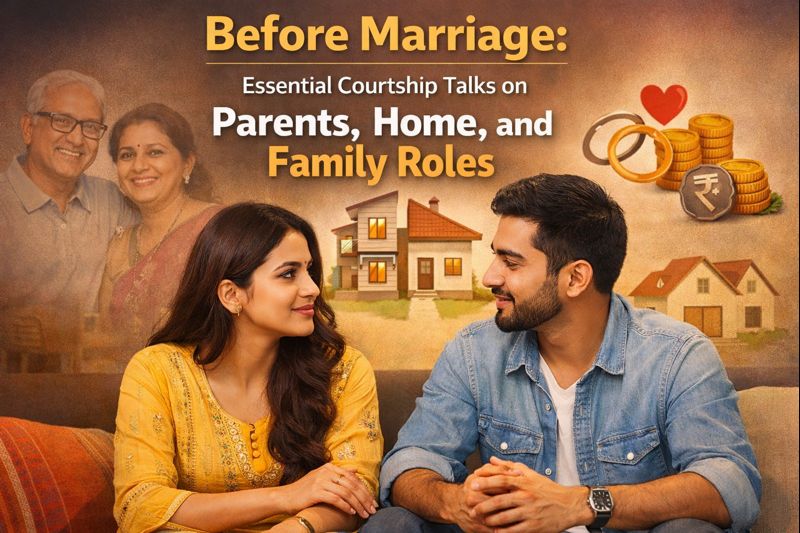
In India, marriage is never just about two individuals—it is a union of families, expectations, resp...
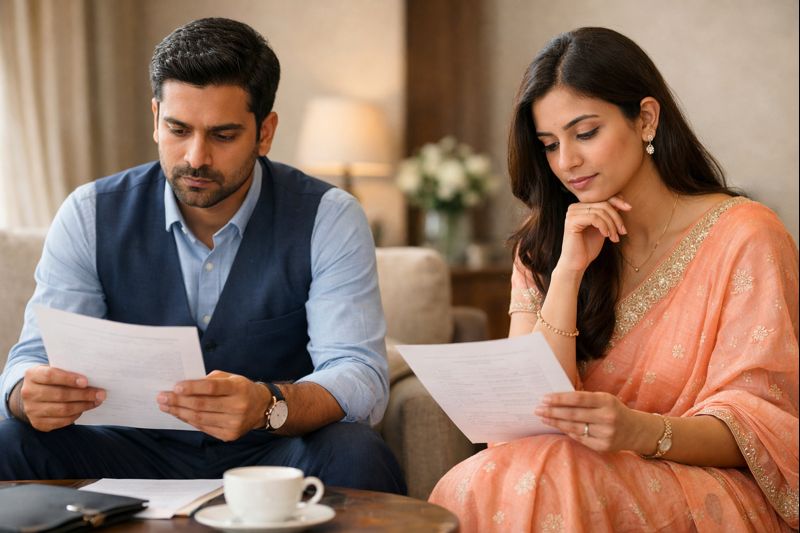
In the Indian matchmaking system, a marriage biodata is much more than a formal introduction. It is...

Introduction: Marriage Is a Decision, Not a Discovery Choosing a life partner is one of the most si...
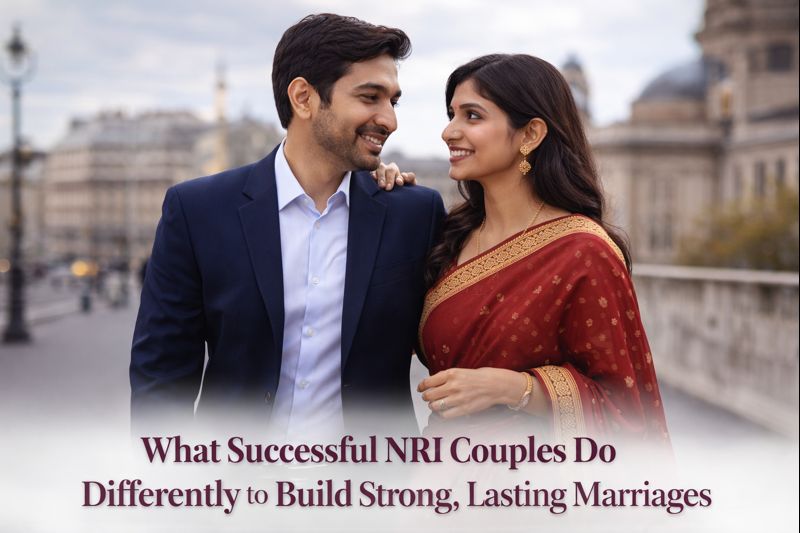
Introduction: Successful NRI Marriages Are Built on Clarity, Not Chance Non-Resident Indian (NRI) m...