How to Handle Cultural Differences in Love Marriages
2026-01-31Love marriages are built on emotional connection, mutual respect, and personal choice. However, when...
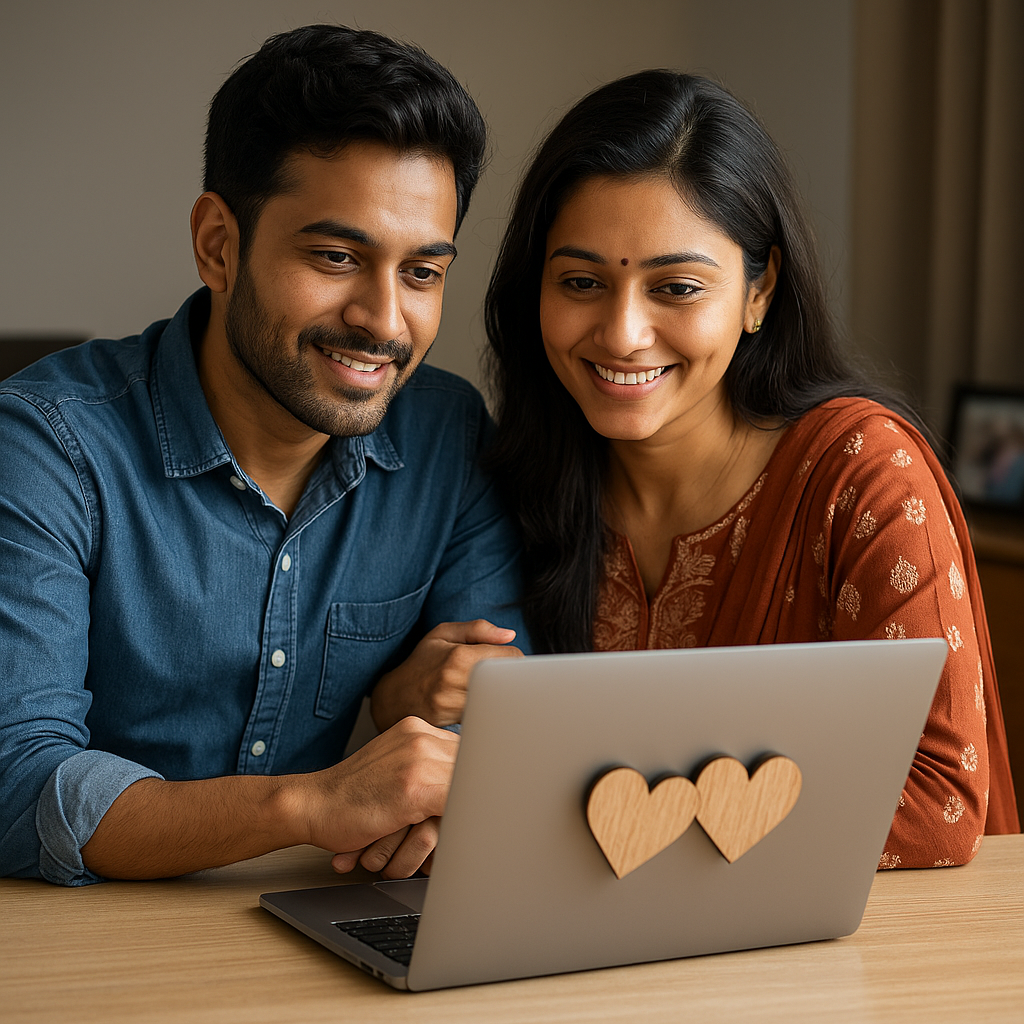
Gone are the days when matrimonial alliances were purely arranged through family connections or neighbourhood word-of-mouth. Today, digital matchmaking through matrimony sites like DigiShaadi has taken centre stage. But what’s truly revolutionising this space is the powerful combination of algorithms, advanced filters, and human involvement.
In this blog, we’ll uncover how AI, machine learning, cultural understanding, and emotional intelligence are working together to help individuals and families find compatible matches online — with real-world impact, especially in India’s evolving marriage landscape.
Your matrimony journey begins with your profile — and not just a photo and biodata. Every field you fill, from your education to your views on tradition, becomes data points for the matchmaking engine.
These inputs are used to:
Generate a compatibility score
Filter out mismatches
Identify hidden connections (e.g., shared hobbies or spiritual values)
Platforms like DigiShaadi have made profile creation intelligent — guiding users step-by-step while also prompting family involvement where required.
One of the most visible features of any matrimony platform is its filter system — but these have evolved drastically over the years.
Beyond basic filters like caste, religion, or language, you now have:
Education and income brackets
Work-life balance preferences
Regional preferences (NRI vs Desi, North vs South India)
Food, drink, and lifestyle habits
Level of family involvement
As discussed in Marriage Matrimony Sites vs Traditional Matchmaking, this digital specificity allows users to express both freedom and tradition while still staying rooted in what matters.
Once your profile is live and filters are set, the platform’s AI engine kicks in. It doesn’t just show you random profiles — it shows you potentially compatible life partners based on:
Common preferences and exclusions
Behavioral analysis (how often you log in, what profiles you skip or save)
Soft compatibility (e.g., spiritual openness, lifestyle balance)
Geo-cultural sensitivity
Unlike old-school matchmakers, AI has no bias. It can suggest matches you may not have considered but statistically complement your values.
As you continue using the site, machine learning begins refining your experience. It “learns” from:
Your likes/dislikes
Your replies and unread messages
How long you view a profile
Your conversations and interest patterns
This is especially helpful for busy professionals, as highlighted in How Working Professionals Use Matrimony Portals, where efficient matching helps save time and reduce fatigue.
While AI runs in the background, human matchmakers still play a critical role, especially on curated or premium platforms.
Human involvement helps in:
Validating user intentions (serious vs casual)
Flagging incompatible matches even if algorithm suggests them
Suggesting emotional compatibility based on shared values
Helping families communicate respectfully
Platforms like DigiShaadi combine tech-driven filtering with trained relationship advisors for premium memberships — offering the best of both worlds.
Matrimony in India isn’t just two individuals getting married — it’s two families, two cultures, and sometimes two religions coming together. That’s why algorithms on Indian matrimony platforms are trained to be culturally sensitive.
This means they understand:
Religious boundaries (e.g., Sunni Muslim matches won’t appear for a Catholic profile)
Regional nuances (e.g., a Tamil Brahmin profile won’t be matched with a non-Brahmin Telugu profile unless explicitly set)
Parental involvement indicators
Language preferences
This culturally coded matchmaking process creates matches that are socially acceptable and emotionally comfortable.
For many Indian families, no match is considered complete without astrological compatibility. Modern matrimony platforms have integrated:
Janam Kundli auto-generation
Ashtakoot matching scores
Manglik dosh detection
Nadi dosh and remedy suggestions
Online astrologer consultations
As described in The Role of Horoscope Matching, these systems allow families to save time and avoid mismatches early on.
The best filters and AI won't help if the profiles are fake. That’s why platforms now require:
Aadhar, PAN, or passport verification
Email and mobile OTP
Parental number or guardian reference (optional)
Selfie-to-photo verification tech
As highlighted in How to Avoid Scams on Indian Matrimony Portals, trust is built on transparency — and good platforms enforce it at every step.
Indian youth today aren’t just browsing — they’re building connections. Matrimony platforms now offer:
Video calls with privacy tools
Interest expression with no contact exchange
Family-invite rishta meetups via Zoom
Shared journaling and compatibility quizzes
Wedding planning integrations (dates, venue planning)
These features are part of the rising digital rishta culture, as deeply explored in How COVID-19 Changed the Way Indians Use Matrimony Sites.
Let’s say you selected only IT professionals within a 50 km radius. But based on your browsing behaviour and values, the system might show you a match in a different city who:
Shares similar life goals
Has parents from the same region
Is open to relocation
Has an astrologically strong match
This behavioural insight-based match is often how real love stories begin — not from filters, but from smart tech that understands you better than you do.
Urban users tend to prefer compatibility filters, spiritual openness, and independence. Rural users prefer community-first matches, horoscope-first, and family involvement.
Good platforms offer AI tools that cater to both — as described in Urban vs Rural Usage of Matrimony Portals.
This ensures that whether you’re in Bengaluru or Bhopal, the matchmaking engine works for your mindset.
For NRIs, traditional matchmaking is harder. That’s where filters like:
Country and time zone
Immigration preferences
Language spoken at home
Faith practices abroad
Help Indian families abroad discover matches who feel Indian, live abroad, and understand both worlds.
As seen in Regional vs Global Matrimony Sites, global filters are critical for diaspora matchmaking.
At its core, matrimony is about deep, emotional, and practical compatibility. While traditional matchmaking relied on gut instinct and community bias, modern platforms rely on data, AI, filters, and human feedback loops.
The most successful matches today are born from:
Smart filtering
AI + emotional compatibility
Family involvement
Cultural sensitivity
Verified safety and transparency
Together, they create a new generation of arranged marriages that feel both practical and romantic — powered by tech but led by heart.

Love marriages are built on emotional connection, mutual respect, and personal choice. However, when...

Finding a life partner as an NRI is very different from local matchmaking in India. Along with emoti...

In India, marriage is never just about two individuals—it is a union of families, expectations, resp...
In the Indian matchmaking system, a marriage biodata is much more than a formal introduction. It is...

Introduction: Marriage Is a Decision, Not a Discovery Choosing a life partner is one of the most si...
Introduction: Successful NRI Marriages Are Built on Clarity, Not Chance Non-Resident Indian (NRI) m...