How to Handle Cultural Differences in Love Marriages
2026-01-31Love marriages are built on emotional connection, mutual respect, and personal choice. However, when...
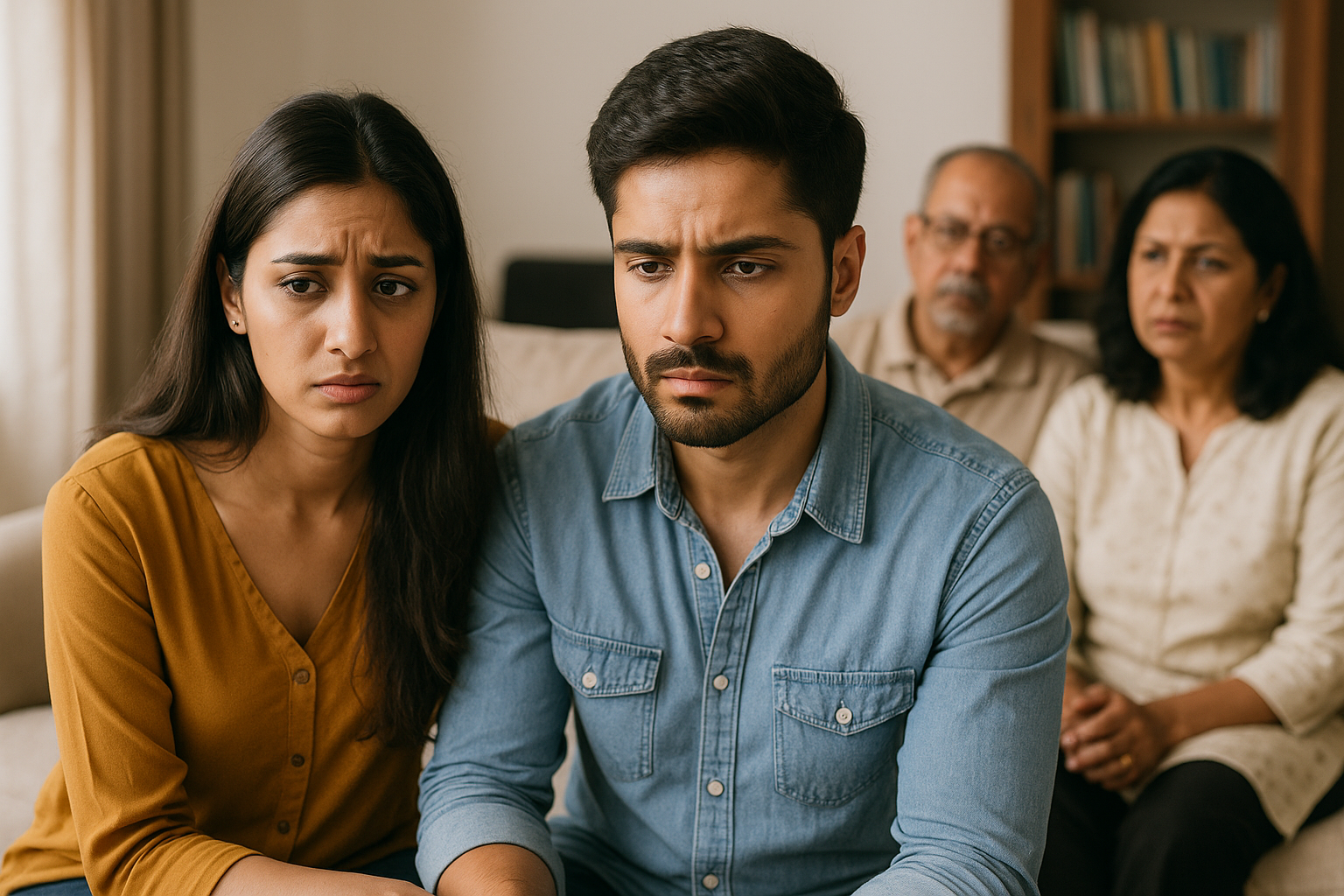
India stands at a crossroads where centuries-old matchmaking customs now intersect with a digital-first generation. Marriage, long seen as a family-centric institution rooted in community, religion, and custom, is now being shaped by apps, algorithms, and AI. This shift isn’t merely technological — it’s emotional, generational, and deeply cultural.
From elders who swear by community networks and horoscopes to Gen Z who prioritise compatibility and autonomy, the debate is growing louder: are marriage matrimony sites really better than traditional matchmaking? And what do Indian families truly think about this evolution?
This blog explores the complex interplay between the old and the new — combining emotional acceptance, family dynamics, generational behaviour, and technological trust.
For decades, traditional matchmaking has meant:
A trusted family priest or matchmaker (pandit or middleman)
Caste and subcaste based community networks
Extended family vetting
Horoscope compatibility
Physical home visits, shared meals, and social rituals
This model was based on community trust and family involvement, not just individual choice. Parents often played the lead role, while the bride or groom had limited say.
Even today, many families — especially in smaller towns or conservative backgrounds — prefer this method. As noted in Urban vs. Rural Usage of Matrimony Portals in India, rural areas still lean on traditional rishta setups, while urban families have shifted more online.
But change is inevitable. And emotional resistance is softening.
Contrary to fears, digital matchmaking hasn’t replaced family — it has redefined their role. Today’s youth no longer want to bypass parents. They simply want more autonomy in the shortlisting and initial interaction stage.
Matrimony platforms allow individuals to:
Search with filters (education, values, goals)
Chat or video call privately first
Then involve family when there's real compatibility
This blended approach is popular with millennials, as explored in Why More Millennials and Gen Z Are Choosing Marriage Matrimony Sites. They value their parents’ blessings — just not blind control.
Initially, many elders distrusted online matrimony sites due to:
Fear of scams
Lack of cultural filtering
No community references
But platforms like DigiShaadi solved these with verified profiles, family-friendly interfaces, and religion/community-specific filtering, as explained in How to Choose the Right Matrimony Portal in India.
Today, many parents actively use these platforms themselves, shortlisting candidates for their children. The key shift? Matrimony portals are now seen as extensions of traditional values, not their replacement.
Despite increasing digital acceptance, Indian families still express concerns:
Can algorithms truly understand cultural nuances?
Will AI miss emotional or spiritual compatibility?
Are online matches as serious about commitment?
This emotional tension is why tools like horoscope matching remain relevant, even online. As shared in The Role of Horoscope Matching in Indian Matrimony Portals, digital jyotish tools allow tradition and tech to work together.
One of the biggest concerns Indian parents have is online safety. What if their daughter connects with someone dishonest? What if a match lies about income, habits, or past relationships?
Matrimony sites today have responded with:
Photo and ID verification
Fake profile detection using AI
Report-and-block features
Moderated interactions
These tools — described in How to Avoid Scams on Indian Matrimony Portals — have reassured families, especially after the pandemic normalised digital behaviour.
For Indian families living abroad, traditional matchmaking networks often fall short. Parents in the US, UK, UAE, or Australia may not have access to local community gatherings, caste-based networks, or pandits. This is where marriage matrimony sites play a vital role.
These platforms offer global filters for region, time zone, language, and even religious denomination. Indian families can now connect with potential matches across continents — something traditional methods simply cannot handle.
This shift is beautifully illustrated in regional vs global matrimony sites, where NRIs often choose digital platforms for their global reach, advanced safety tools, and cultural filters.
One emotional concern parents often have is whether online matrimony leads to a dilution of religious and community values. But modern platforms have evolved to reflect those very identities.
Users can filter matches based on:
Religion (Hindu, Christian, Muslim, etc.)
Sect and denomination (e.g., Roman Catholic, Orthodox, Sunni, Vaishnav, etc.)
Language and culture (Tamil, Gujarati, Punjabi, Telugu)
Community traditions (vegetarian, non-drinker, temple-going)
This ensures that even while the technology is modern, the values remain rooted. Discussing Faith Early in Christian Matrimony highlights how crucial early conversations about belief systems are — and how matrimony portals now help facilitate that.
The pandemic brought dramatic changes to how families think about digital relationships. During lockdowns, video rishtas became the norm. Zoom calls replaced first meetings. Entire weddings were planned and executed online.
This wasn’t just a temporary adjustment — it rewired expectations. Even elders who once resisted video chats began embracing them as safe, convenient, and efficient.
As explored in How COVID-19 Changed the Way Indians Use Marriage Matrimony Sites, the crisis catalysed digital comfort, making online matchmaking acceptable across generations.
Traditional matchmakers rely on intuition and social knowledge. But they’re also limited by bias and local access. Matrimony sites, on the other hand, now use AI and behavioural data to analyse compatibility in a more structured way.
These systems evaluate:
Communication styles
Emotional tone in chats
Shared interests and goals
Lifestyle alignment
Religious or spiritual values
As covered in AI and Compatibility Matching: The Future of Marriage Matrimony Sites, these tools improve match success rates — and have even started gaining parental trust.
At the heart of the debate is a core emotional truth: Indian families want their children to be happy — but they also want to feel involved. Traditional methods offered reassurance through community vetting. Digital platforms now offer a new kind of reassurance: transparent profiles, verified identities, and shared communication.
When matrimony portals allow both the individual and their parents to explore matches collaboratively, it leads to healthier outcomes. This emotional balance — choice with blessings — is exactly what the modern Indian marriage experience is evolving into.
Matrimony isn’t just changing because of tech. It’s changing because families are learning to trust digital platforms that respect tradition while offering innovation.
Key trends observed in Top Trends in Indian Matrimony Portals in 2025 include:
Parents creating profiles for their children — but with children’s approval
Families attending virtual rishta meetings together
Older users (40+) joining platforms themselves for second marriages
Digital matchmaking assistants helping with search and scheduling
This marks a move from resistance to active participation in digital matchmaking by Indian families.
The debate between traditional matchmaking and marriage matrimony sites isn’t about one replacing the other — it’s about blending the strengths of both.
Traditional matchmaking offers deep community knowledge and emotional reassurance.
Matrimony platforms offer wider reach, smarter tools, and individual choice.
The most successful families are those who’ve adopted a hybrid approach — using platforms like DigiShaadi to discover and screen matches, then involving extended family for final discussions and approvals.
Marriage has always been a family affair in India — and that isn’t changing. But what is changing is how families participate in the process.
Marriage matrimony sites, once seen as impersonal or risky, are now respected as family-friendly tools that preserve tradition while empowering individuals. Families are no longer being replaced — they’re being included in smarter, safer, and more personalised ways.
The emotional core remains the same: love, trust, and shared values. What’s evolved is how we reach it.
Love marriages are built on emotional connection, mutual respect, and personal choice. However, when...

Finding a life partner as an NRI is very different from local matchmaking in India. Along with emoti...
In India, marriage is never just about two individuals—it is a union of families, expectations, resp...
In the Indian matchmaking system, a marriage biodata is much more than a formal introduction. It is...

Introduction: Marriage Is a Decision, Not a Discovery Choosing a life partner is one of the most si...
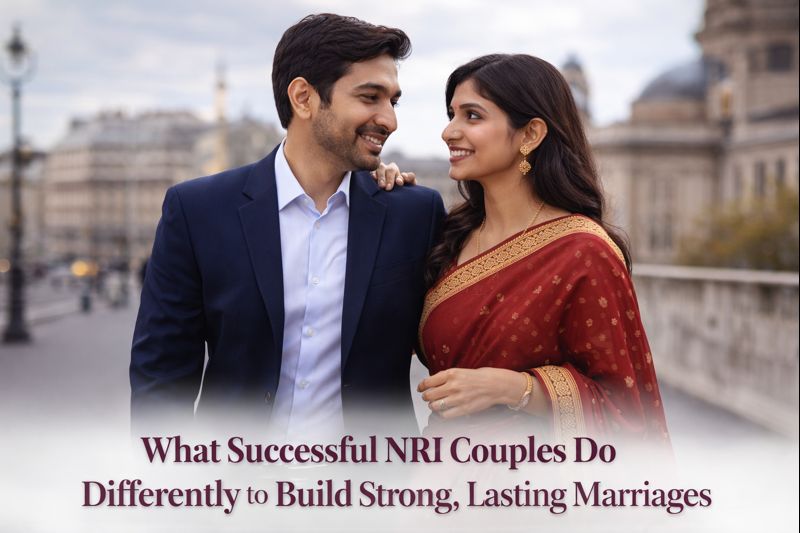
Introduction: Successful NRI Marriages Are Built on Clarity, Not Chance Non-Resident Indian (NRI) m...